Page
Nose
Nose Surgery, commonly known as Rhinoplasty, is a highly advanced cosmetic and functional procedure designed to reshape, reconstruct and optimise the nose for improved appearance, facial balance and breathing. Serving patients seeking aesthetic refinement, breathing improvement or structural correction from injury or deformity, Nose Surgery remains one of the most personalised and transformative facial procedures.
What Is Nose Surgery?
Nose Surgery involves reshaping or rebuilding the nasal framework, including:
- Nasal bones
- Cartilage
- Bridge
- Tip
- Septum
- Soft tissue
Whether the goal is cosmetic enhancement such as Tip Rhinoplasty, Dorsal Hump Reduction or Alarplasty—or medical correction such as Septoplasty, Functional Rhinoplasty or Nasal Valve Repair, the procedure is tailored to the individual’s needs and expectations.
Modern approach ensures:
✔ Natural, refined aesthetic results
✔ Improved nasal airflow and sinus function
✔ Balanced facial harmony
✔ Preservation of ethnic identity in procedures like Ethnic Rhinoplasty
Our Primary Nose Surgery Services
Septoplasty
Alarplasty
Who Can Benefit from Nose Surgery?

Nose Surgery is suitable for men and women who:
- Feel the shape or size of their nose does not suit their face
- Have problems breathing through one or both nostrils
- Have deformities from birth like Cleft Nose Correction
- Have suffered trauma leading to crookedness or collapse
- Previously had surgery and now require Revision Rhinoplasty
- Need sinus-related procedures like Sinus Surgery
- Want enhancement without downtime through Non-Surgical Rhinoplasty
An ideal candidate should:
✔ Be in good health
✔ Have realistic expectations
✔ Understand the healing timeline
✔ Be willing to follow postoperative guidelines
What Can Nose Surgery Improve?
Nose Surgery can significantly enhance both appearance and function. Results may include:
Aesthetic Improvements
- Better symmetry in frontal view
- Smoother bridge after Dorsal Hump Reduction
- More defined and raised profile after Bridge Augmentation
- Natural projection through Tip Rhinoplasty
- Narrower nostrils following Alarplasty
- A more balanced face when combined with Chin Augmentation
Functional Improvements
Patients often experience better airway due to:
- Septoplasty
- Turbinate Reduction
- Nasal Valve Repair
- Structural reconstruction supported by Cartilage Grafting, Spreader Grafts or Osteotomy
Reconstructive Benefits
For patients needing correction from injury or disease, Nose Surgery restores:
- Nasal shape
- Structural support
- Breathing
- Natural appearance
What Can Nose Surgery Improve?
Nose Surgery can successfully enhance various cosmetic and functional aspects of the nose, resulting in a more balanced, natural and harmonious appearance.
Height and shape of the nasal bridge
Patients with a flat, low or uneven nasal bridge can benefit from techniques such as Bridge Augmentation using cartilage grafts or implants. This adds height and improves the nasal profile, especially in Asian and Indian facial anatomy. For those with a bump, Dorsal Hump Reduction helps create a smoother and straighter bridge.
Angle and definition of the nasal tip
Procedures such as Tip Rhinoplasty refine the tip by reshaping cartilage, adjusting projection, or correcting droop. The tip can be made sharper, slimmer, more lifted, or more symmetrical, improving the overall shape without altering other nasal structures.
Nostril shape and width
Techniques like Alarplasty reduce wide, flared, or uneven nostrils by removing a small wedge of tissue for a more balanced frontal appearance. This creates refined nostril proportions that complement the nose tip and bridge without visible scarring.
Front and side profile symmetry
Nose Surgery improves symmetry by correcting deviation or imbalance in bone and cartilage alignment. Procedures such as Osteotomy and cartilage reshaping help straighten the nose and enhance harmony from both front view and lateral profile.
Airway function
Functional procedures such as Septoplasty, Nasal Valve Repair, and Turbinate Reduction enhance airflow by straightening internal walls, supporting collapsed sections, or reducing enlarged turbinates. Patients often experience easier breathing, reduced congestion, better sleep, and improved quality of life.
Facial proportion through combinations like Rhinoplasty with Chin Augmentation Combo
Sometimes the nose may look larger or less defined due to a recessed or weak chin. Combining nose surgery with chin augmentation balances the facial profile. This creates proportion between the nose, chin, and jawline, delivering a more attractive and structured look.
Advanced Techniques for Lasting Results
In complex cases requiring structural rebuilding, advanced methods like:
- Osteotomy – controlled reshaping of nasal bones
- Rib Cartilage Rhinoplasty – strong, stable grafting for major deformities
- Spreader Graft – widening the middle vault for stability and breathing
These techniques ensure a strong anatomical foundation, long-term stability, improved function and natural-looking aesthetic results.
How Nose Surgery Is Performed
Nose Surgery is a technically advanced procedure performed under local or general anesthesia based on the case complexity. The exact steps vary depending on whether the procedure is:
Step-by-Step
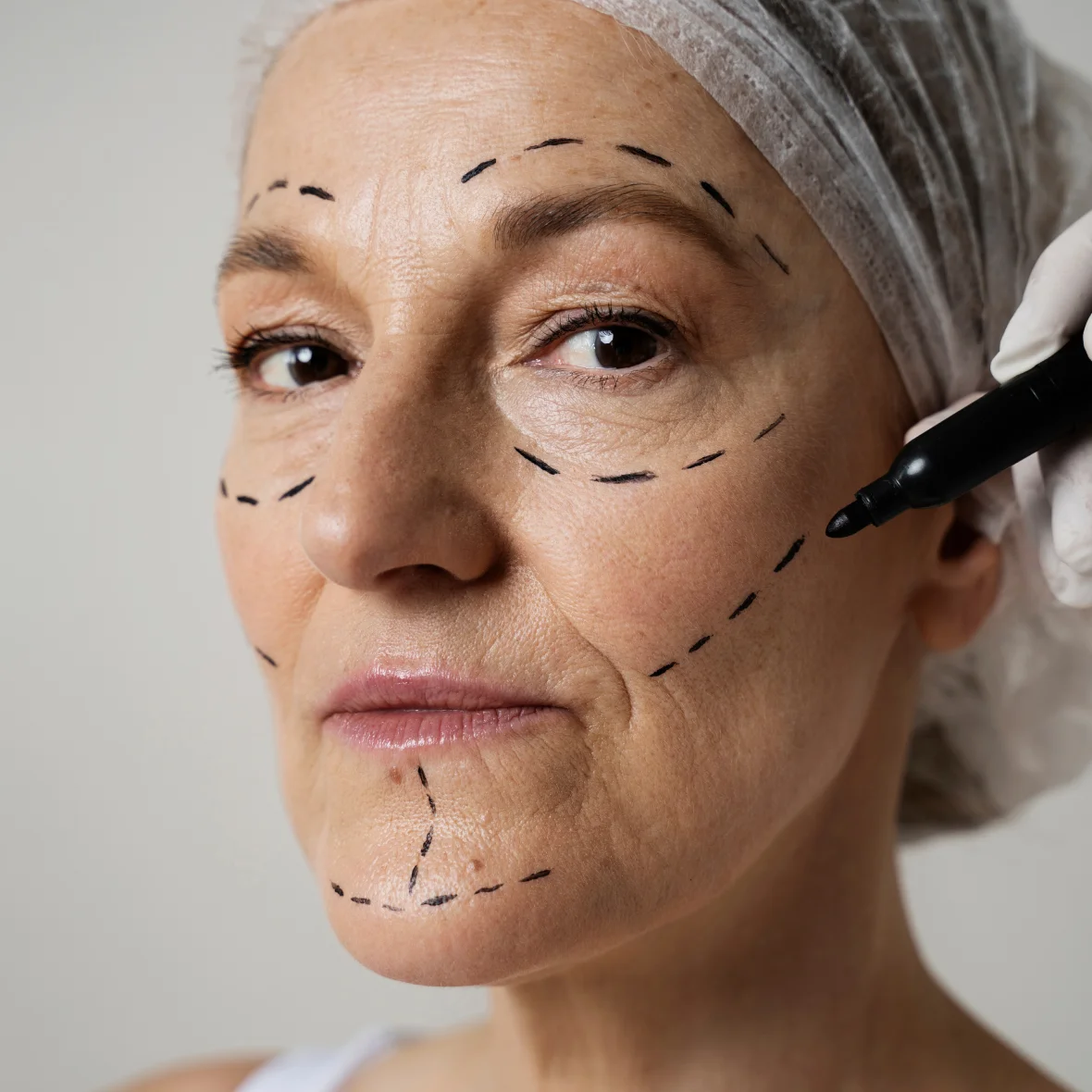
Pre-Operative Marking & Planning
- Reviews preoperative images
- Marks nasal landmarks and incision lines
- Assesses symmetry, tip projection, dorsal height, and radix position
- Confirms the airway plan (e.g., septoplasty, valve support)
Anaesthesia
Depending on complexity:
- Minor cases (e.g., Alarplasty, Tip Refinement): Local anesthesia with sedation
- Full Rhinoplasty, Septo-Rhinoplasty, or reconstructive work: General anesthesia
The patient remains pain-free and comfortable at all times.
Incisions – Open vs. Closed Approach
The surgeon selects one of two major techniques:
Closed Rhinoplasty
- All incisions inside the nostrils
- No visible external scar
- Suitable for moderate adjustments
Open Rhinoplasty
- Small incision across the columella
- Used when significant structural visibility is needed
- Ideal for complex cases, revision surgeries, deformity correction, or cartilage grafting
Both approaches aim for minimal visible scarring.
Accessing Nasal Framework
The surgeon lifts the skin off the cartilage and bone with delicate dissection, exposing:
- Upper lateral cartilage
- Lower lateral cartilage
- Septal cartilage
- Nasal bones
This allows precise sculpting.
Bridge Correction
Depending on patient needs:
Dorsal Hump Reduction
- Bone and cartilage are shaved or trimmed
- Bridge becomes smoother and more refined
Bridge Augmentation
For low bridges, the surgeon may add support using:
- Septal cartilage
- Rib cartilage
- Silicone implant
- Gore-Tex implant
Bridge shaping may also include Spreader Graft placement to improve breathing and width.
Tip Reshaping
Tip refinement techniques may include:
- Cartilage reshaping
- Suturing techniques
- Cartilage graft placement
- Columella Strut for long-term support
Aims to refine projection, rotation, definition, and symmetry.
Nostril (Alar) Refinement
When nostrils are wide or flaring, Alarplasty reshapes the alar base. Incisions are placed in natural creases to hide scars.
Septoplasty & Airway Correction
If breathing is an issue, the surgeon performs:
- Septoplasty to straighten a deviated septum
- Turbinate Reduction for enlarged turbinates
- Nasal Valve Repair for valve collapse
Breathing improvements are often noticeable shortly after healing begins.
Osteotomy – Bone Reshaping
If bone alignment is required:
- Controlled fractures narrow or straighten the nasal bones
- Helps correct deviations or rebuild after trauma
Reconstructive Techniques
Some patients may require:
- Rib cartilage grafting for major collapse
- Skin grafting for post-cancer or trauma reconstruction
- Internal sutures for symmetry
Procedures like Cleft Nose Reconstruction, Post-Trauma Repair, or Skin Cancer Reconstruction may involve multiple stages.
Recovery & Healing Timeline
Immediate Post-Surgery Period
- Swelling, pressure, and mild discomfort are normal.
- The nose may feel congested due to internal swelling or protective soft packing.
- Bruising may appear around the cheeks or under the eyes, especially after osteotomy.
- Patients are advised to:
- Rest with their head elevated
- Apply ice packs to reduce swelling
- Take prescribed pain medication and antibiotics
- Avoid touching or blowing the nose
- Breathing through the mouth may be more common during this stage.
Splint and Dressing Removal
- The external nasal splint is usually removed during the follow-up visit.
- Bruising and swelling begin to significantly reduce.
- Nasal passages start opening as inflammation decreases.
- The nose may already show early improvement in shape, though still swollen.
- Patients may return to office-type work if they feel comfortable.
- Gentle saline nasal rinses are often recommended to clear dried mucus and keep passages clean.
Socially Presentable
- Most visible swelling and bruising have subsided.
- The nose looks more natural from the front and profile angles.
- Patients can resume normal social activities without noticeable signs of surgery.
- Light exercise may be resumed, but:
- No contact sports
- No swimming
- No heavy gym lifting
- Internal swelling may still affect breathing temporarily.
Shape Becoming More Defined
- The nasal tip and bridge continue refining as internal swelling decreases.
- Breathing improves significantly, especially after procedures like:
- Septoplasty
- Nasal valve repair
- Turbinate reduction
- Tissue settling continues, and the cartilage strengthens in its new structure.
- Numbness around the nose and upper lip gradually resolves.
- Most patients see their new nose shape about 70–80% refined by this stage.
Final Refinement
- Subtle swelling in the tip and bridge fully resolves.
- Internal scar tissue matures and softens.
- Final contour, projection, symmetry, and definition become visible.
- Photos taken at this stage are considered the “final cosmetic result.”
- Patients undergoing complex procedures such as:
- Rib Cartilage Rhinoplasty
- Spreaders graft
- Revision Rhinoplasty
may experience a slightly longer refinement period due to deeper structural work.
Results You Can Expect
✔ A more refined and attractive nasal shape
✔ Improved front and side facial profile
✔ Natural-looking results
✔ Enhanced breathing and nasal function
✔ Higher self-confidence and satisfaction
✔ Long-lasting structural stability
Potential Risks & Safety Information
- Temporary swelling, bruising, or pressure around the nose may occur in the early recovery phase.
- Mild nasal congestion or blocked breathing can happen as tissues heal internally.
- Infection or bleeding is rare but possible and typically controlled with medication and care.
- Some patients may notice temporary numbness or altered skin sensation around the nose or upper lip.
- Minor irregularities or asymmetry may occur as swelling settles.
- Breathing difficulty can persist if healing is incomplete or internal swelling is significant.
- Very rarely, cartilage or graft displacement may require monitoring or correction.
- Scar visibility is usually minimal, but varies based on healing and incision type.
- Allergic reactions to anesthesia or medications are uncommon but possible.
- Some patients may require revision surgery if outcomes do not fully meet expectations.
Our Doctors
Board-Certified Doctor
Why Choose Magniva Aesthetics?
- Otorhinolaryngology Expertise
Our procedures adhere strictly to fundamental ENT and reconstructive principles, prioritizing safety, precision and functional integrity through a holistic approach to nasal health. - Natural-Looking Results
We focus on subtle enhancements that achieve natural-looking results without ever appearing “overdone,” respecting your unique facial harmony for long-term satisfaction. - Advanced Techniques & 3D Planning
We employ advanced techniques, from scarless approaches to complex cartilage grafting, utilizing cutting-edge 3D imaging for superior predictability and customized care. - Safety-First Protocols
Patient safety is paramount. Our process includes detailed examinations, breathing assessments and fully customized surgical planning before any procedure begins. - State-of-the-Art Facility
We provide care in a modern facility with advanced equipment and strict sterilization protocols, ensuring the highest standards of patient-centric safety and comfort.
Book Your Consultation
Want a refined, balanced nose while keeping your natural facial character?
Our board-certified plastic surgeons will evaluate your nasal structure and design a personalized treatment plan.
📞 Call: +91 8108140011
🌐 Website: https://magniva-aesthetics.com
📍 Visit Us: 902 Shanti Vallabh CHS Sunder Nagar Road 3, Kalina.
Santacruz East Mumbai. 400098
📩 Book Online: https://magniva-aesthetics.com/contact
have a question?
Quick answers to questions you may have
1. What is the difference between Rhinoplasty and Septoplasty?
- Rhinoplasty focuses on reshaping the nose for cosmetic or structural enhancement.
- Septoplasty corrects a deviated septum to improve airflow and breathing.
When performed together, it is called Septo-Rhinoplasty, providing both functional and aesthetic benefits.
2. Will Rhinoplasty leave visible scars?
Most incisions are inside the nose, leaving no external scars. Even open rhinoplasty places a small incision in a natural crease, becoming nearly invisible over time.
3. How long does recovery take?
- Most swelling reduces in 1–2 weeks
- Normal daily activities resume within this period
- Full refinement of nose shape may take a few months as tissues settle
4. Is Nose Surgery painful?
Post-surgical discomfort is mild and temporary. Modern techniques and medication make recovery comfortable for most patients.
5. Can Nose Surgery improve breathing?
Yes. Procedures like Septoplasty, Functional Rhinoplasty, Nasal Valve Repair, and Turbinate Reduction are specifically designed to improve nasal airflow and sinus function.
6. What if I had a previous Rhinoplasty and did not like the result?
Revision Rhinoplasty can correct cosmetic dissatisfaction, structural problems, breathing restrictions, or asymmetry after a previous surgery.
7. Are there non-surgical options available?
Yes. Popular non-surgical options include:
- Non-Surgical Nose Job (Dermal Fillers)
- Nose Thread Lift
- Nasal Botox
These improve shape and symmetry with minimal downtime, but results are temporary.
8. Is Nose Surgery suitable for my ethnicity?
Absolutely. Techniques like Ethnic Rhinoplasty enhance the nose while maintaining natural ethnic characteristics and facial personality.
9. Are results permanent?
Yes. Surgical Rhinoplasty results are long-lasting. Non-surgical treatments last 9–18 months depending on the material used.
10. How do I know which technique is right for me?
A detailed consultation, facial analysis, and airway examination determine whether:
- Cosmetic Rhinoplasty
- Septoplasty
- Functional surgery
- Reconstruction
- Non-surgical enhancement
is most suitable.