
Page
Tip Rhinoplasty
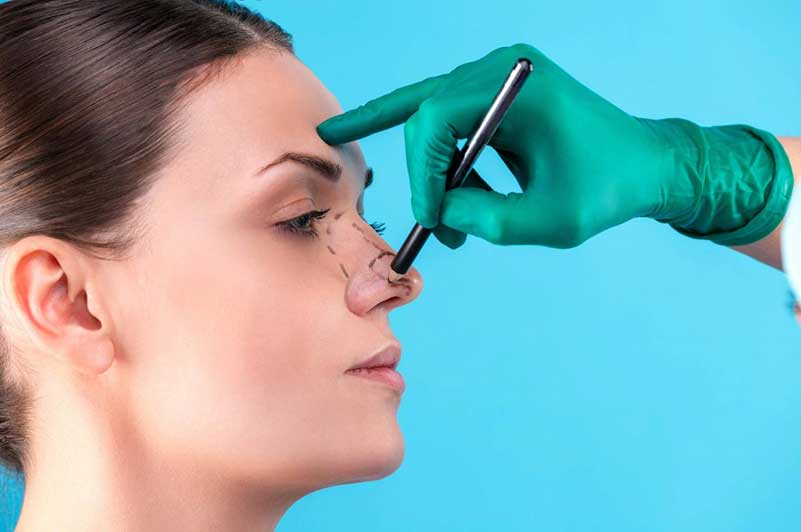
Tip Rhinoplasty—also known as Nasal Tip Plasty—is a highly specialised cosmetic procedure that focuses solely on improving the tip of the nose. At Magniva Aesthetics, Mumbai, our expert facial plastic surgeons are renowned for achieving beautifully defined, natural and balanced nasal tips using advanced cartilage techniques and precision artistry.
This procedure is ideal for patients who do not require full rhinoplasty, but want to refine the tip for a more harmonious facial appearance.
What Is Tip Rhinoplasty?
Tip Rhinoplasty specifically targets the lower third of the nose, reshaping the nasal tip without altering the nasal bones. The procedure can correct:
- Bulbous or rounded nasal tip
- Drooping (ptotic) nasal tip
- Over-projected or under-projected tip
- Asymmetrical tip
- Wide nasal tip
- Pinched or boxy tip
- Poor definition due to weak lower cartilage
According to medical references , tip rhinoplasty requires precise modification of the alar cartilages (lower lateral cartilages), often supported with grafts to ensure long-lasting, symmetrical results.
At Magniva Aesthetics, we ensure results that look refined, natural and well-balanced with your overall facial structure.
Our Primary Tip Rhinoplasty Services
Bulbous Tip Rhinoplasty
Droopy Tip Correction
Tip Refinement Surgery
Tip Projection & Rotation Adjustment
Cartilage Grafting for Tip Support
Who Is an Ideal Candidate?
Tip Rhinoplasty may be right for individuals who:
- Are bothered specifically by the shape of the nasal tip
- Have a bulbous, round, droopy or asymmetrical tip
- Want refinement without full nasal reconstruction
- Have thick or thin nasal skin affecting tip definition
- Are in good health and have realistic expectations
It is ideal for people who want noticeable improvement but prefer a less invasive alternative to full rhinoplasty.
Pre-Treatment Evaluation at Magniva Aesthetics (Mumbai)
Your consultation includes:
- Detailed nasal examination
- 3D facial imaging for precise planning
- Analysis of cartilage strength, tip rotation, projection and symmetry
- Evaluation of skin thickness and healing tendencies
- Customised surgical plan based on your aesthetic goals
Every patient receives a personalised assessment to ensure the best outcome.
Types of Nasal Tip Concerns We Treat
- Bulbous or round tip
- Boxy or wide tip
- Drooping nasal tip
- Under-rotated or over-rotated tip
- Asymmetrical tip
- Pinched or weak tip
- Deviated or twisted tip cartilage
- Poor definition due to thick nasal skin
Tip Rhinoplasty Procedure
Step-by-Step
1. Pre-operative Assessment
Clinical exam: Inspect tip shape, skin thickness, lower lateral cartilage size/strength, columellar and alar anatomy and nasal airway.
Photographic analysis: Standardised photos (frontal, profile, basal, three-quarter) to document baseline and guide planning.
Expectations & planning: Discuss aesthetic goals (projection, rotation, width, symmetry), limitations and whether grafting is likely required.
Medical checks: Review medications (stop anticoagulants per protocol), medical history, consent and anaesthesia fitness.
2. Anaesthesia & Marking
Anaesthesia choice: Local anaesthesia with IV sedation for minor cases or general anaesthesia for patient comfort / complex work.
Local infiltration: Lidocaine with epinephrine to reduce bleeding and provide postoperative analgesia.
Marking: With the patient upright, mark domes, alar rims, columella (if open approach), planned cephalic trims and donor sites for grafts (septum/auricle).
3. Incision & Exposure
Approach selection:
Closed (endonasal) — internal marginal or intercartilaginous incisions; no external scar; limited exposure.
Open (external) — transcolumellar plus marginal incisions for full exposure of lower lateral cartilages.
Soft tissue elevation: Carefully raise the skin-soft tissue envelope to expose the lower lateral cartilages, domes, and caudal septum while preserving blood supply.
4. Cartilage Reshaping (Primary Tip Modifications)
Cephalic trim: Conservative resection of the upper lateral crura to reduce bulbosity while retaining structural width (usually ≥6–8 mm).
Cartilage scoring/weakening: Strategic scoring to allow controlled bending or rotation of cartilage.
Lateral crural techniques: Lateral crural overlay or steal procedures to alter length and projection when needed.
Direct excision/contouring: Localised reductions or shaping to correct asymmetry or excess soft-tissue bulk.
5. Structural Support & Grafting (If Needed)
Columellar strut: Septal cartilage graft between medial crura to increase projection and support rotation.
Tip/shield grafts: Onlay grafts placed over domes for definition, especially with thin or weak cartilage.
Dome or interpositional grafts: Small grafts to correct asymmetry or add subtle projection.
Donor choices: Septal cartilage preferred; conchal (ear) cartilage for rim/graft curvature; costal cartilage reserved for major reconstructions.
6. Suture Techniques for Final Shaping
Transdomal sutures: Narrow and define the domes to sharpen tip definition.
Interdomal / medial crural sutures: Control interdomal distance and increase tip projection/rotation.
Lateral crural sutures: Stabilise the lateral crura and correct flaring or malposition.
Tension calibration: Adjust suture tension incrementally and reassess with the patient upright to avoid overcorrection or contour irregularities.
7. Closure & Immediate Support
Layered closure: Reapproximate soft tissues and mucosa with fine absorbable sutures; close transcolumellar skin with fine non-absorbable or absorbable sutures.
Internal support: Place internal splints or Doyle splints if septal/graft work was performed.
External dressings: Minimal external taping; rarely an external splint for isolated tip cases. Apply antibiotic ointment to incisions.
8. Post-operative Care & Follow-up
Immediate care: Cold compresses for 48 hours, head elevation, and pain control with oral analgesics.
Activity & precautions: No heavy lifting, bending, or strenuous exercise for 2–4 weeks; avoid contact sports for 6–8 weeks. No nose-blowing for 1–2 weeks.
Wound care & medications: Short antibiotic course if indicated, saline nasal care as directed, topical ointment on external incisions.
Follow-up schedule: 5–7 day check (suture removal if needed), 2 weeks, 6 weeks, 3 months, 6 months, and 12 months as required.
Expected healing: Socially acceptable appearance ~1–2 weeks; major swelling subsides by 6–12 weeks; final tip definition by 6–12 months (longer with thick skin).
Recovery & Healing Timeline
Mild pain, pressure, and swelling around the nose and cheeks.
Small blood-tinged nasal discharge is normal.
Cold compresses help reduce swelling.
Keep the head elevated (including during sleep).
Avoid talking excessively, sneezing, bending or blowing your nose.
Swelling is at its highest around Day 3–4, then starts improving.
Breathing feels congested due to internal swelling.
Bruising (if any) fades rapidly from Day 5 onwards.
Day 5–7: External sutures (if open approach) and internal splints may be removed.
Return to light, non-strenuous activities is possible.
Around 60–70% of swelling and bruising has reduced.
Nasal tip still appears fuller, rounder, or slightly elevated — this is normal.
Most patients feel confident returning to office work and social interactions.
Nasal breathing gradually improves as swelling subsides.
Bruising resolves completely.
A noticeable reduction in swelling allows early tip refinement to appear.
You may resume gym, walking, and light exercise after Week 3.
Avoid contact sports, heavy weightlifting, or activities risking nose injury.
About 60–80% of swelling is gone.
Tip definition improves significantly as cartilage and soft tissue settle.
Any numbness near the nasal tip or columella decreases.
Most patients look “normal” in photos by this stage.
Gradual refinement continues; subtle swelling resolves month by month.
Tip achieves its final projection, rotation, and definition.
Scars (if open technique used) fade and blend into skin tone.
Thick-skinned patients may take up to 12–18 months to see full definition.
Results You Can Expect
- A sharper, more refined nasal tip
- Improved symmetry and definition
- Better tip rotation and projection
- Correction of a droopy or bulbous appearance
- Natural-looking enhancement without an “operated” look
- Long-lasting, stable results
Risks & Possible Complications

While generally safe, risks may include:
- Swelling and mild bruising
- Temporary numbness
- Infection (rare with proper care)
- Minor asymmetry
- Need for revision in rare cases
- Prolonged tip stiffness initially (normal for cartilage surgery)
At Magniva Aesthetics, Mumbai, we minimize risks with:
- Strict safety protocols
- Experienced, board-certified surgeons
- Comprehensive follow-up care
Non-Surgical Tip Enhancement Options
For patients not ready for surgery:
- Dermal fillers for minor asymmetry
- Non-surgical tip lift techniques
- Temporary refinement of the tip profile
These are excellent options but not permanent and cannot replace surgical correction of bulbous or droopy tips.
Our Doctors
Board-Certified Doctor
Why Choose Magniva Aesthetics
- Advanced Tip Rhinoplasty specialists
- Customised approach using 3D imaging
- Minimal downtime, precise sculpting
- Natural, elegant results that complement the face
- Transparent consultations and personalised care
- Safe, accredited surgical environment
When you choose Magniva Aesthetics, you choose artistry, precision and trust.
Book Your Consultation
Want a more refined, balanced nose tip without changing your natural facial identity?
Our facial plastic surgery specialists will assess your nasal structure and create a customised tip rhinoplasty plan tailored to your aesthetic goals and breathing needs.
📞 Call: +91 8108140011
🌐 Website: https://magniva-aesthetics.com
📍 Visit Us: 902 Shanti Vallabh CHS Sunder Nagar Road 3, Kalina.
Santacruz East Mumbai. 400098
📩 Book Online: https://magniva-aesthetics.com/contact
have a question?
Quick answers to questions you may have
Will tip rhinoplasty change my whole nose?
No. It only alters the nasal tip unless combined with additional procedures.
Are scars visible?
Closed tip rhinoplasty leaves no visible scars. Open approach leaves a barely noticeable line that fades.
Is tip rhinoplasty permanent?
Yes. Results are long-lasting as cartilage reshaping is permanent.
Can fillers fix a bulbous tip?
No. Fillers cannot reduce cartilage or refine a large tip—they only add volume.